A patient arrives with chest tightness, shaking hands, nausea, and a pulse that will not settle. The tests may be normal. The fear is not. This is where the case becomes misunderstood: when clinicians find no heart attack, ulcer, or infection, people can hear, “Nothing is wrong.” But that is not what the evidence says. Understanding how stress causes physical symptoms means following a real biological alarm system from the brain into nearly every organ in the body.
Stress is not imaginary, and neither are its symptoms. It is a survival response designed to act fast when danger is near. The problem begins when the alarm keeps sounding after the immediate threat is gone – or when the threat is not visible at all.
The body’s alarm system does not wait for permission
Your nervous system is constantly scanning for threat. Some threats are obvious: a near collision, a violent confrontation, a medical emergency. Others are quieter but can be just as persistent: grief, financial strain, isolation, caregiving, trauma reminders, job insecurity, or the sense that something terrible is about to happen.
When the brain interprets a situation as dangerous, regions involved in threat detection signal the hypothalamus. That small structure helps activate the sympathetic nervous system, better known as the fight-or-flight response. Adrenaline and noradrenaline raise the heart rate, tighten blood vessels, sharpen attention, and redirect blood flow toward muscles that may need to run or fight.
A second system, the hypothalamic-pituitary-adrenal axis, releases cortisol. Cortisol helps mobilize energy and regulate inflammation in the short term. It is useful during an emergency. But a system built for brief bursts can become disruptive when it remains activated day after day.
The body does not neatly separate a threatening email, an unresolved trauma, and a predator in the dark. It responds to perceived danger. That distinction can make stress symptoms feel baffling, especially when they appear during an ordinary meeting, in the grocery store, or at 3 a.m. in a quiet bedroom.
How stress causes physical symptoms across the body
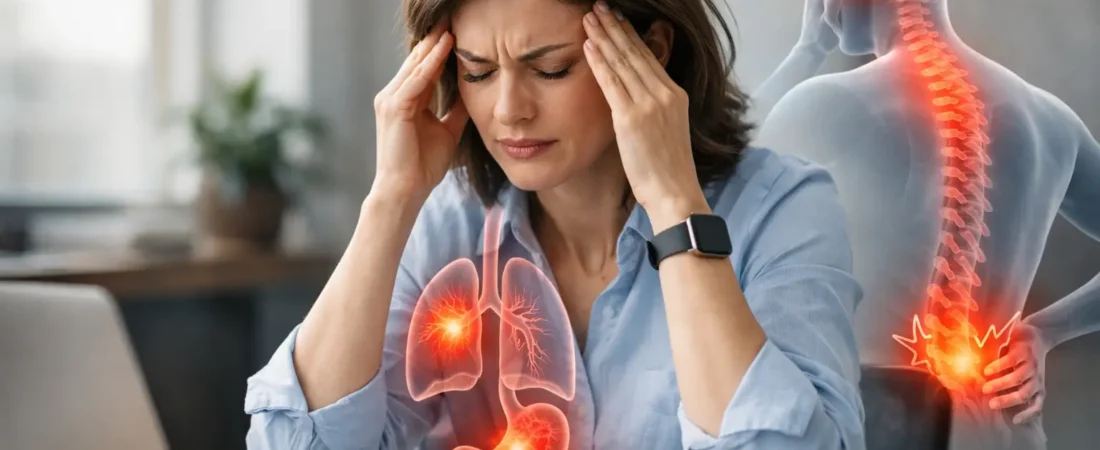
The first clue is often cardiovascular. Stress hormones can make the heart beat faster and harder. Muscles in the chest wall can tighten. Breathing may become shallow and rapid. Together, those changes can produce palpitations, chest pressure, dizziness, tingling, and the frightening sensation that a heart problem is unfolding.
Sometimes the symptoms are part of panic. Sometimes they are not. Anxiety and stress can cause chest discomfort, but they do not make heart disease impossible. The same symptom can have more than one explanation, and the stakes are too high to self-diagnose chest pain.
The digestive system is another frequent scene of the crime. The brain and gut are linked through nerves, hormones, immune signals, and the microbiome. During stress, digestion can slow, speed up, or become more sensitive. A person may develop nausea before a presentation, diarrhea during a prolonged crisis, constipation during depression, or abdominal pain that seems to move without warning.
For people with irritable bowel syndrome, stress may not be the original cause, but it can amplify symptoms dramatically. The gut becomes more reactive, and normal digestive sensations can register as pain or urgency. This is not weakness or overreaction. It is altered signaling along a very real brain-gut pathway.
Muscles also keep records. A clenched jaw, raised shoulders, a rigid neck, and a guarded lower back are common physical responses to threat. Hold that posture for hours or days and the result may be tension headaches, migraines, jaw pain, muscle spasms, or widespread aching. Sleep loss makes the pattern worse by reducing pain tolerance and leaving the nervous system more reactive the next day.
Stress can also affect the skin. Some people flush, sweat heavily, itch, or break out in hives during periods of intense strain. Existing conditions such as eczema, psoriasis, acne, and rosacea can flare. The exact pathway differs by condition, but stress-related immune and inflammatory signaling can influence what appears on the surface.
Then there are the symptoms that feel hardest to explain: a lump in the throat, frequent urination, dry mouth, trembling, blurred focus, fatigue, ringing in the ears, or the sense of being detached from one’s surroundings. None automatically proves stress is the cause. Yet each can occur when the nervous system is persistently activated, breathing patterns change, sleep deteriorates, and attention locks onto every internal sensation.
Why symptoms can become louder over time
A single stress response is not usually the issue. The danger is repetition. When someone repeatedly scans their body for signs of illness, each skipped heartbeat or muscle twitch can feel like new evidence of catastrophe. Fear increases adrenaline. Adrenaline intensifies the sensation. The sensation confirms the fear. The loop closes.
This does not mean symptoms are “all in your head.” The brain is part of the body, not separate from it. Pain, nausea, dizziness, and breathlessness are experiences generated through networks involving the brain, nerves, organs, and immune system. Stress can alter those networks without making the symptoms fabricated.
The investigative question is not, “Is this physical or psychological?” It is often, “What physical processes are stress changing, and what other medical explanations still need to be ruled out?”
When the explanation may be stress – and when it may not
A pattern can offer clues. Symptoms that arrive during conflict, deadlines, public speaking, trauma reminders, or periods of poor sleep may have a strong stress component. Symptoms that ease with rest, distraction, slow breathing, movement, therapy, or a change in circumstances can provide another piece of evidence.
But patterns are not verdicts. Stress can coexist with asthma, thyroid disease, anemia, arrhythmias, diabetes, autoimmune disease, medication side effects, sleep apnea, and many other conditions. It can also worsen the symptoms of an established illness. A clinician should not dismiss a concerning symptom simply because someone has anxiety, and patients should not assume every recurrence is harmless because it happened during stress once before.
Seek urgent medical care for new or severe chest pain, trouble breathing, fainting, sudden weakness or numbness, confusion, signs of stroke, coughing or vomiting blood, severe abdominal pain, black stools, a rapid or irregular heartbeat with severe symptoms, or thoughts of self-harm. These warning signs deserve evaluation, even if stress is clearly present.
For ongoing but less urgent symptoms, a useful medical visit starts with specifics: when the symptom began, how long it lasts, what triggers it, what relieves it, changes in sleep or appetite, medications and supplements, caffeine or substance use, and any family history that may matter. A symptom diary can help reveal a pattern, but it should support medical care, not replace it.
Turning down an alarm that has become too sensitive
The most effective approach depends on the case. If the stressor is temporary, improving sleep, reducing caffeine, eating regularly, and restoring routines may make a noticeable difference. If the stressor is chronic, the solution may require more than relaxation techniques. It may involve boundaries, financial or workplace support, trauma-informed therapy, treatment for anxiety or depression, or a medical plan for pain, migraines, gastrointestinal symptoms, or insomnia.
Breathing exercises can help, but not because they erase real problems. Slow, comfortable breathing signals safety to the nervous system and can reduce the spiral of hyperventilation, racing heart, and dizziness. Gentle exercise can discharge some of the physical activation. Consistent sleep gives the brain a better chance to regulate threat responses. None of these is a cure-all. They are ways of giving an overworked system evidence that the emergency has passed.
The most unsettling cases are often the ones with symptoms but no obvious injury on a scan or blood test. Medicine may not always identify a single culprit, but the absence of a dramatic finding does not erase the patient’s experience. Stress can leave fingerprints on the heart, gut, skin, muscles, sleep, and senses. The task is to take those fingerprints seriously, investigate what they may be hiding, and never stop asking whether the alarm is responding to danger – or becoming one itself.